
Name-Based Case Searches
Georgia Courts E-Access sends both Tattnall State Court and Tattnall Superior Court users to PeachCourt. What you meet there is a login screen. There is no open name-search form for the public. You must create an account or sign into one before any case fields appear. Once inside, choose the court and type the party name exactly as the filing spells it. Try a tighter spelling before assuming no case exists.
- Identify Superior, State, Juvenile, Probate, Magistrate, or Municipal Court.
- For State or Superior Court, follow the official E-Access provider link to PeachCourt.
- Sign in or register, then select the correct Tattnall court.
- Enter the party name shown on the filing and narrow it with the filing year or case number.
- Open the matching case and verify its court, parties, status, and access date.
| Search detail | Use | Caution |
|---|---|---|
| Party name | Starting point when the number is unknown | Similar names can produce a false match |
| Court class | Limits the search to the proper office | Municipal and Probate cases use other routes |
| Filing year | Narrows a common name | Do not substitute the incident year |
| Case number | Best exact identifier | Use the court-assigned form |
When PeachCourt will not answer your question, pick up the phone or visit the clerk who keeps the record. A failed login, a missing image, or a blank results screen proves nothing about whether a Tattnall County case exists.
PeachCourt Requires an Account
The PeachCourt access page displays email and password fields, password help, and a registration link. No public Tattnall party-name search appears before you sign in.
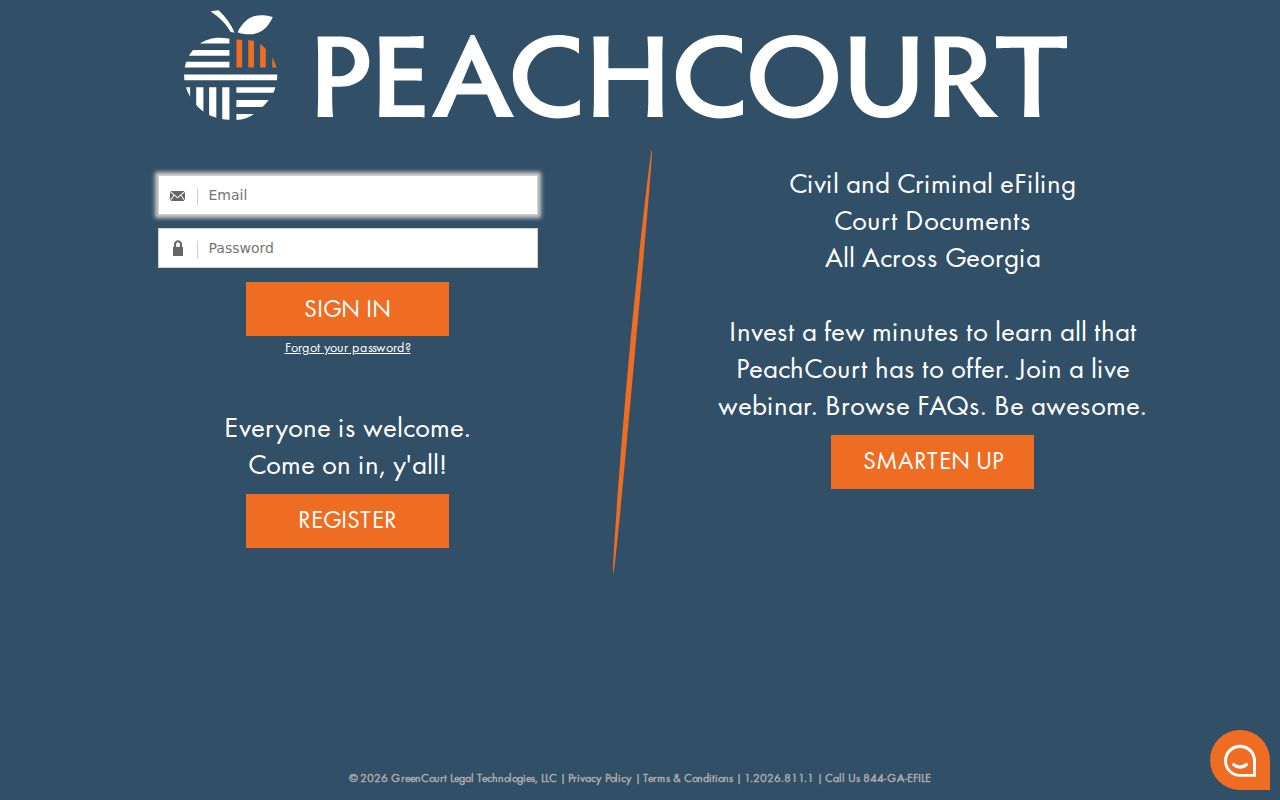
That gate matters. Online availability and anonymous public searching are two different things in Tattnall County, and the Clerk of Superior Court remains the fallback for State and Superior records the account cannot reach. The PeachCourt registration page is where account creation starts.
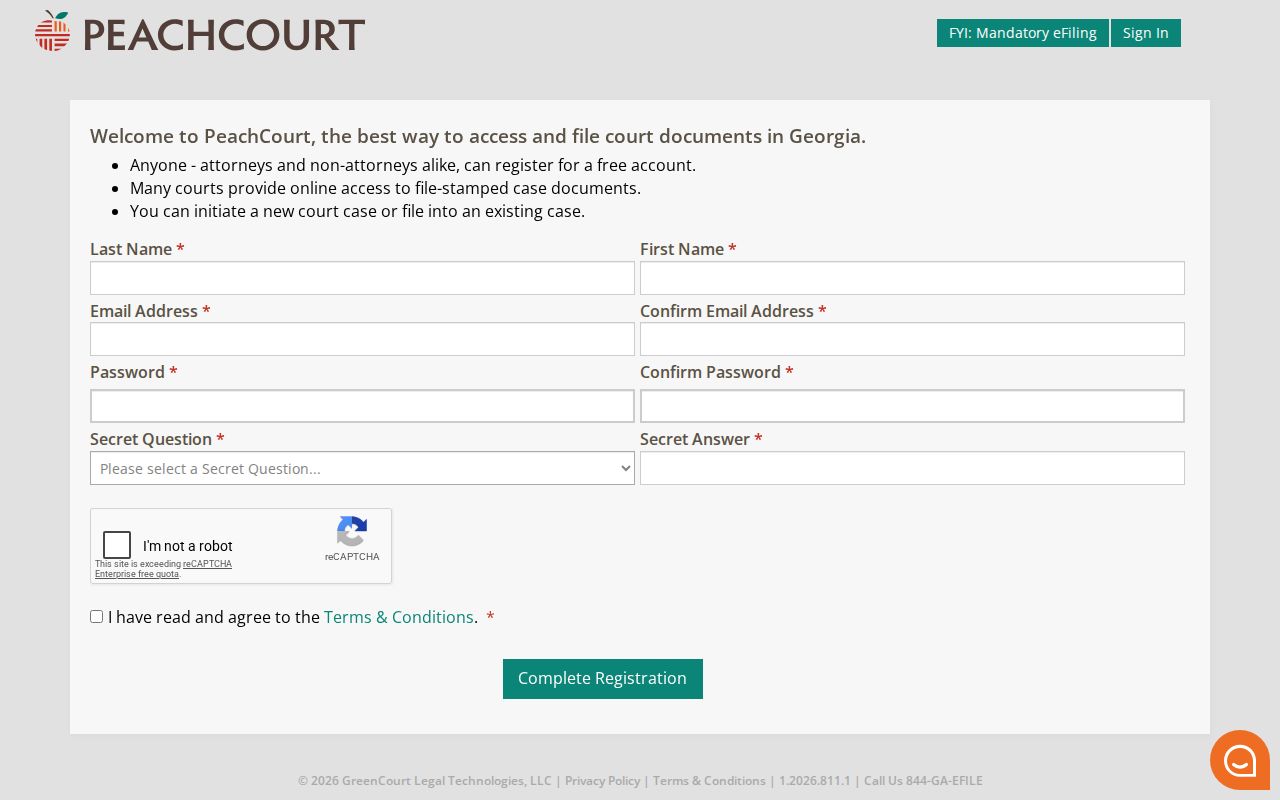
An account gets you into the provider interface and nothing more. Sealed matters, juvenile cases, old files, and some documents may still never show up on screen.
Case Number Searches
The strongest key for any docket search is the court-assigned case number. Tattnall County has no verified open number pattern. Never invent a local format; copy the identifier exactly from a notice, pleading, order, or clerk receipt. Include any prefix, year, or suffix. Write [court-assigned case number] rather than a made-up Tattnall code.
Hand the clerk the court class, filing year, party names, and document type along with the number. A local trial-court number can differ from an appellate one. Federal and bankruptcy systems use their own identifiers entirely. Tattnall federal matters sit in the Southern District of Georgia's Statesboro Division. They run through PACER/CM-ECF.
GSCCCA Search Is Not Docket Search
The official GSCCCA search menu covers real estate, liens, plats, PT-61 records, UCC filings, notaries, and related authority databases. None of that is a court docket.
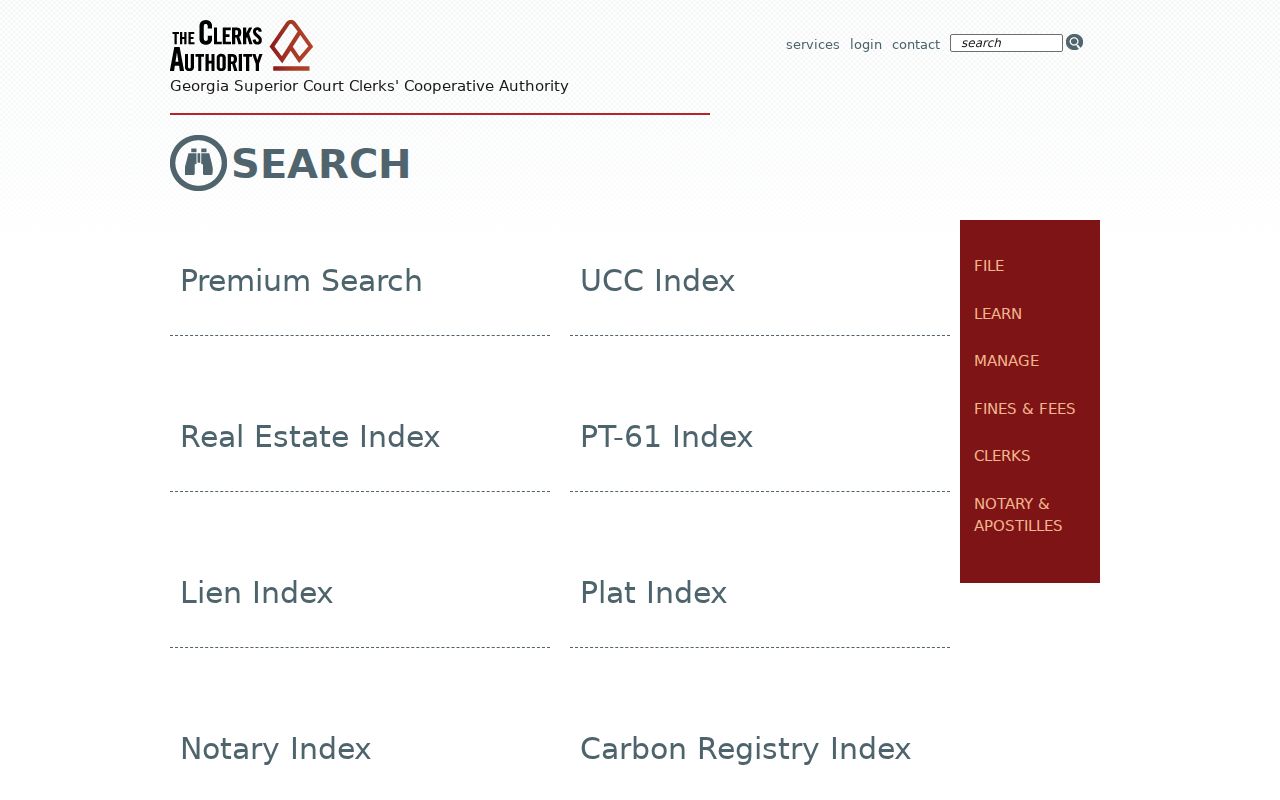
Calling that menu a Tattnall criminal or civil case-name search would mislead people. GSCCCA does supply the official clerk directory and other court-authority services. But the named E-Access provider for Tattnall State and Superior cases is PeachCourt, and that is where a docket search actually happens.
Common search error: finding a deed, lien, or UCC entry does not mean the related court docket has been found.
Case Search Results Explained
A docket result might give index facts, a chronological docket, or full document images. Those layers are not interchangeable. Check what the interface really returns before you rely on it.
| Court and case number | Identifies the court file and distinguishes it from similar names. |
|---|---|
| Case style | Lists parties and their roles, such as plaintiff and defendant. |
| Filing date | Shows when the case or paper was filed, not necessarily the event date. |
| Status | Indicates pending, closed, transferred, or another recorded state. |
| Docket entries | Chronological filings, settings, and court actions. |
| Documents | Images or copies where access is available. |
| Disposition | The recorded outcome; later orders or appeals may affect it. |
Save the source URL and the date you accessed it, and open the underlying order or judgment when the precise ruling matters. A short docket label can leave out context the filed document contains.
Tattnall E-Filing Is Separate
Georgia Courts lists PeachCourt as mandatory for electronic filing in Tattnall State and Superior courts. Filing a document and searching a public case are separate tasks. The official E-File directory names the provider and shows its participation status.
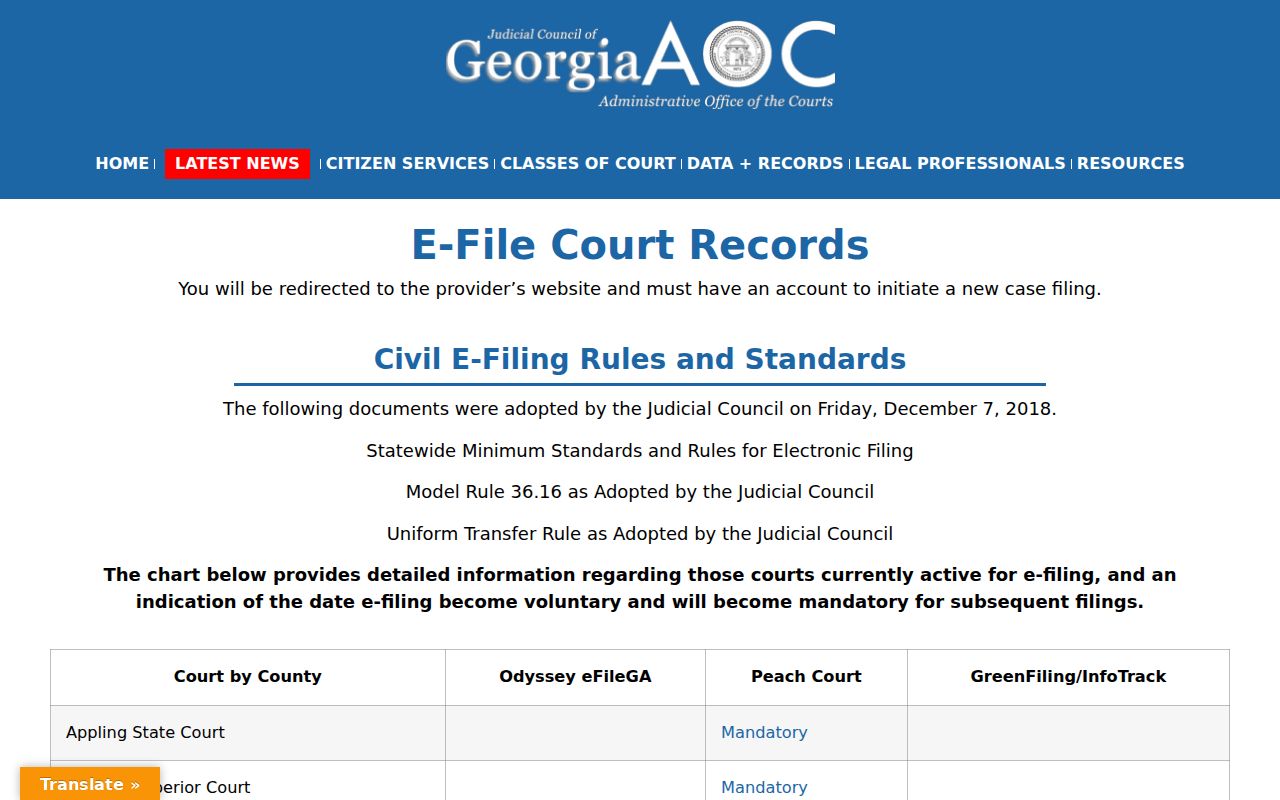
Treat that directory as a routing source, not a live case list. A filer follows the court and provider instructions, while a record seeker uses E-Access or contacts the clerk directly. The GSCCCA Authority eFile portal is a second official filing system, with login, registration, support, and filing menus.
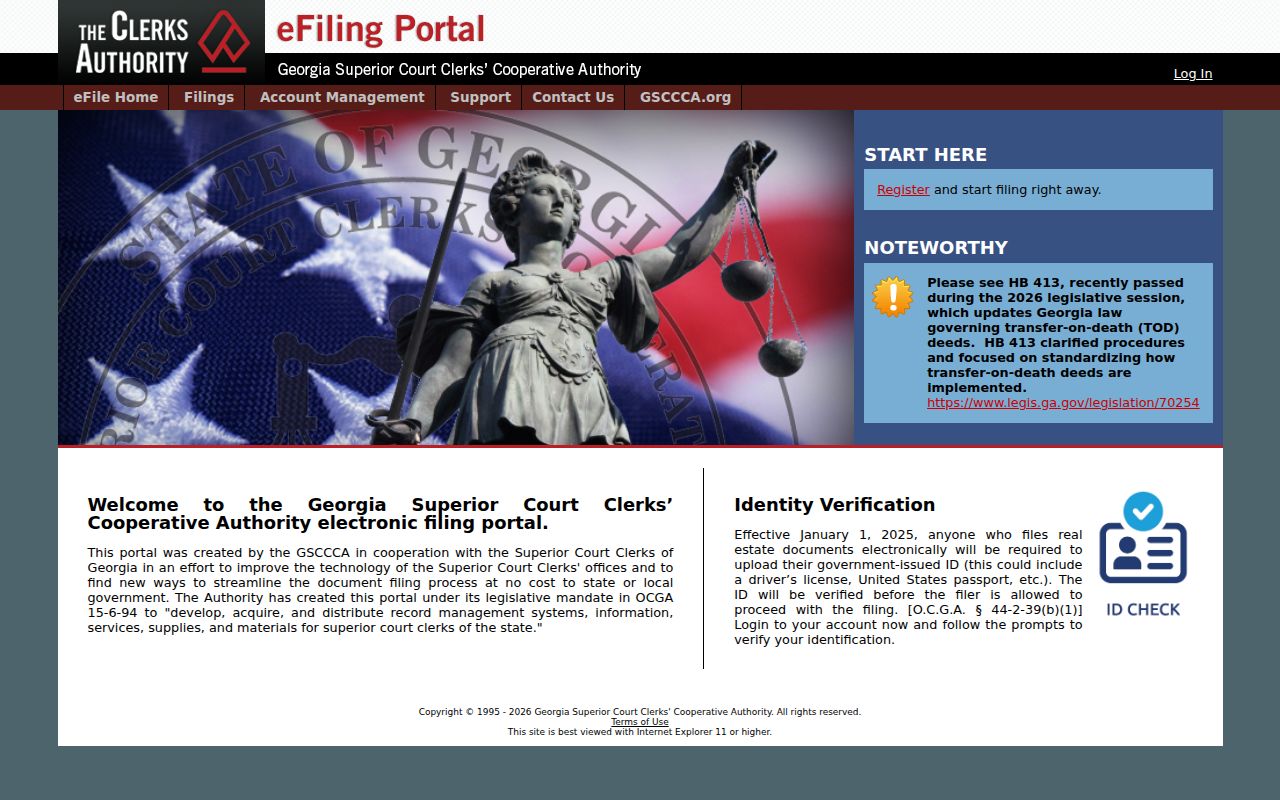
That portal does not replace PeachCourt. Georgia Courts specifically assigns PeachCourt to Tattnall State and Superior courts for filing.
Two Ways to Search: County and State
Georgia has no single statewide public name-search database covering every Tattnall court class. The state directory points users to providers instead. Tattnall's central clerk offers local counter, phone, and record-request access.
| Route | Coverage | Best use |
|---|---|---|
| Georgia Courts E-Access to PeachCourt | Tattnall State and Superior provider route | Account-based online access |
| Tattnall Clerk of Superior Court | Superior, State, and Juvenile records | Confirming a file, copies, and access limits |
| Probate or Magistrate office | Each office's own cases | Estate, guardianship, small civil, warrant, or dispossessory matters |
| Municipal court | Issuing city's cases | City citations and ordinance matters |
| PACER/CM-ECF | Federal and bankruptcy records | Southern District cases |
Paige D. Mulligan's Clerk of Superior Court office sits at 111 North Main Street, P.O. Box 39, Reidsville, GA 30453. GSCCCA lists hours of 8:00 a.m. to 5:00 p.m., Monday through Friday. It lists phone 912-557-6716. When you call, ask whether the record is viewable. Ask whether copies exist, and whether the matter actually belongs to a different court.
Separate Doors for Tattnall Courts
Probate Judge Tara Finnerty's office handles estates, wills, guardianships, and related licenses. Chief Magistrate John Mock's office takes small civil claims within the posted limit. It also handles dispossessory matters, warrants, and preliminary hearings. Searching PeachCourt for Superior Court cases is not a search of either office. Plan your case lookup accordingly.
Municipal routing starts with the city that issued the ticket. Glennville offers payment and contact routes, and Reidsville posts municipal court information. Cobbtown, Collins, and Manassas host no official city docket search. Call the city office rather than assume no case or court exists.
- Have the court or issuing city.
- Provide the case or citation number.
- Give names exactly as filed.
- Include the filing year or date range.
- Ask for the desired docket, document, or certified copy.
Narrow Tattnall Docket Requests
If an online docket search comes up empty, reshape the question into a precise written request. Say exactly what you want: to inspect the file, a plain copy, or a certified copy. A good request names the court and the record type. It also names the parties, the filing year, and the case number if you have it. Add a sensible date range too. The Tattnall County request page asks for names, dates, times, locations, and case numbers. It warns that charges may apply.
Putting the request in writing keeps its scope clear, even though Georgia guidance also recognizes oral requests. Ask the office to notify you before any costs pile up. One caution matters here. A general county records request cannot override a court order, juvenile confidentiality, or the rules of criminal discovery. If county staff point you to a court clerk instead, resend the same narrow details to that office. Keep the reply for your files.
Useful request line: identify the court, case, date range, document, desired format, and fee-notice preference.
Which Cases Stay Restricted
Access to a Tattnall County court docket has legal limits. Juvenile records stay confidential and open only with proper authorization. Sealed cases, redacted identifiers, and files restricted by statute or court order may simply not show up in a routine docket search. Uniform Superior Court Rule 21 sets the rules on access. It demands a stated basis for any restriction. So a missing result can mark a legal boundary, not a failed search.
The county's open-records route is no workaround for criminal discovery or a judge's restriction. Keep any written request narrow: name the custodian, the court, the record type, the parties, the date range, and the case number. Leave out Social Security numbers and other personal details the office does not need. The county warns that charges may apply. It promises to contact the requester before processing whenever fees are involved.
No result is not no record. Recheck the court, spelling, filing year, provider account, and access rule.
If the case remains missing, contact the clerk that holds it. Ask whether the file is offline, archived, restricted, or assigned to another court.