
Tattnall County Civil Docket Searches
The Tattnall Clerk of Superior Court keeps Superior and State civil records. Georgia routes online access for those courts to PeachCourt, whose public entry requires an account. Gather the court, parties, year, case number, and document type. If the account fails, call 912-557-6716, visit 111 North Main Street in Reidsville, email paige.mulligan@gsccca.org, or mail P.O. Box 39, Reidsville, GA 30453.
Magistrate and Probate records use separate offices. No countywide civil export or public terminal was verified. A failed search in one court is not proof that no civil record exists.
- Identify Superior, State, Magistrate, or Probate Court.
- Use the Georgia E-Access directory for Superior or State Court.
- Match parties, court, year, and case number.
- Read filings, motions, settings, orders, and judgment separately.
- Request inspection or a certified document from the custodian.
Tattnall Civil Dockets Split Courts
Superior and State routing is not interchangeable. Superior Court has broad civil power and domestic work. State Court hears county-level civil matters not reserved elsewhere. Magistrate Court has a posted limit, while Probate Court holds estates and guardianships.
| Court | Civil work | Route |
|---|---|---|
| Superior | Broad civil and domestic | PeachCourt or clerk |
| State | County civil | PeachCourt or clerk |
| Magistrate | Claims through $15,000; dispossessory | Magistrate office |
| Probate | Estates and guardianships | Probate office |
Subject matter, amount, and filing choice can affect jurisdiction. Confirm the court before ordering a file.
Civil Dockets: What They Show
A Tattnall County civil docket is a chronological index, not always the full file. It may show the case style, court, filing date, parties, complaint or petition, answers, motions, settings, orders, judgment, satisfaction, and appeal. No open sample Tattnall row was captured, so local labels and number formats must be confirmed in the live record.
| Case Number | The court identifier; confirm its court and year. |
|---|---|
| Parties | Plaintiff and defendant, or petitioner and respondent. |
| Filings | Complaint, petition, answer, exhibit, or notice. |
| Motions | A request for a ruling and any related order. |
| Judgment | The recorded ruling, dismissal, or result, subject to later activity. |
Tattnall Civil Documents Need Context
A docket entry may identify a complaint, motion, or order without showing the full text. PeachCourt describes document access, but its public login does not establish that every Tattnall paper is viewable. Ask for the exact document and filing date.
A certified copy is clerk-authenticated. A screenshot is not the same product. GSCCCA eCertification may help participating courts, but Tattnall participation, fees, and delivery must be confirmed. A search locates an index; a record request seeks the document behind it.
What Cases Fill the Civil Docket
Tattnall civil work includes general and domestic matters, smaller claims and dispossessory proceedings in Magistrate Court, and estate or guardianship proceedings in Probate Court. Garnishment is a named clerk category. The right docket depends on the relief and court that accepted the filing.
- General Superior and State civil claims.
- Divorce, custody, support, and related domestic matters.
- Magistrate claims through the posted $15,000 limit.
- Dispossessory and garnishment records.
- Probate estates, wills, and guardianships.
Tattnall Magistrate Civil Dockets
The Chief Magistrate page sets the local civil limit at $15,000 and lists dispossessory writs. Magistrate Court has no jury trials; a written jury request moves the case to Superior Court and may create another record.
The official local source appears below:
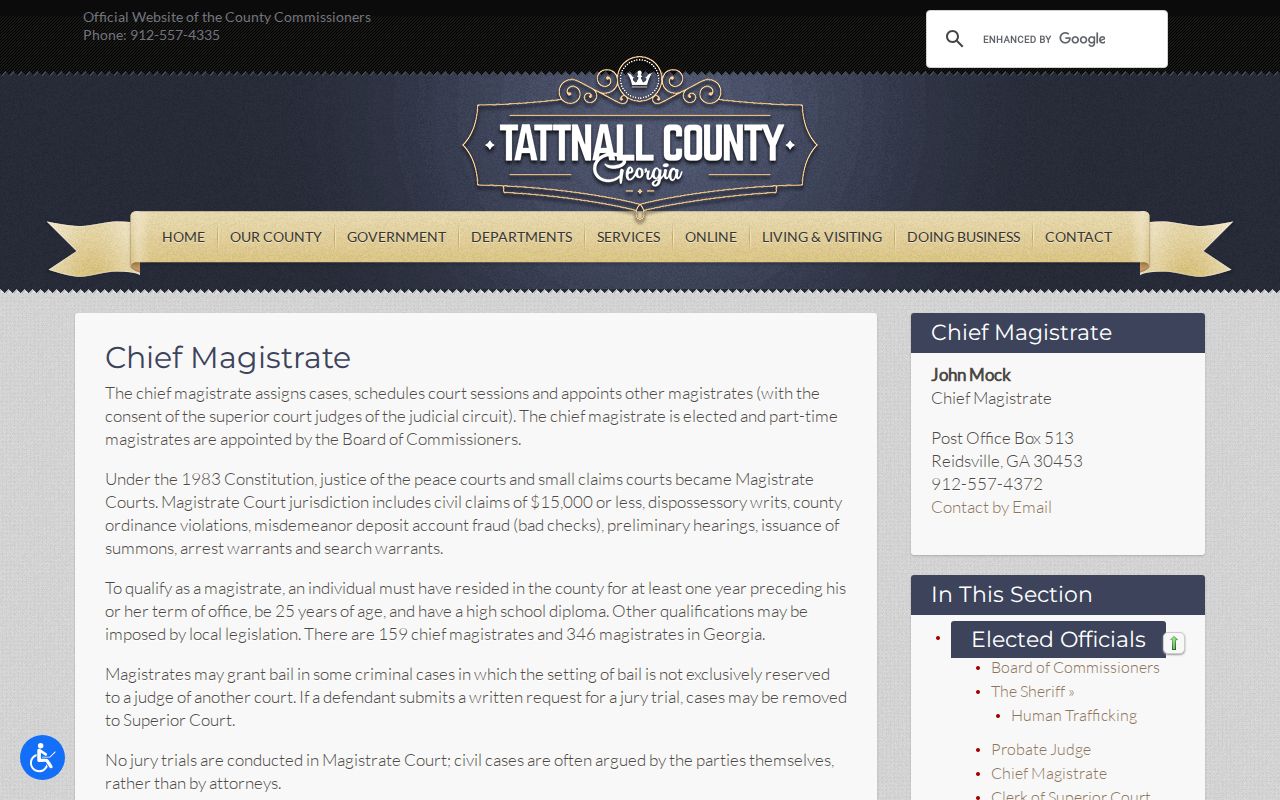
It explains why small claims and dispossessory searches begin with Magistrate Court. Call 912-557-4372 and confirm viewing hours and copy steps.
Hearings on the Civil Docket
A civil setting may be a motion hearing, conference, trial, or another event. Read the date, time, court, judge, courtroom, and setting type. No dependable public Tattnall civil calendar was found. The Atlantic circuit sends date questions to the clerk, while the county calendar is a general event calendar.
A continuance moves an event and does not decide the claim. A scheduling order can set deadlines that are not hearings. Confirm changes with the custodian. The Tattnall County court schedule gives the full fallback route.
Tattnall Probate Civil Dockets
Probate Court handles wills, estates, guardianships and conservatorships, involuntary hospitalization, marriage licenses, and weapons-carry licenses. An estate is not a Superior civil docket by default. Identify the estate or decedent, year, document, and certification need.
The county's official source appears here:
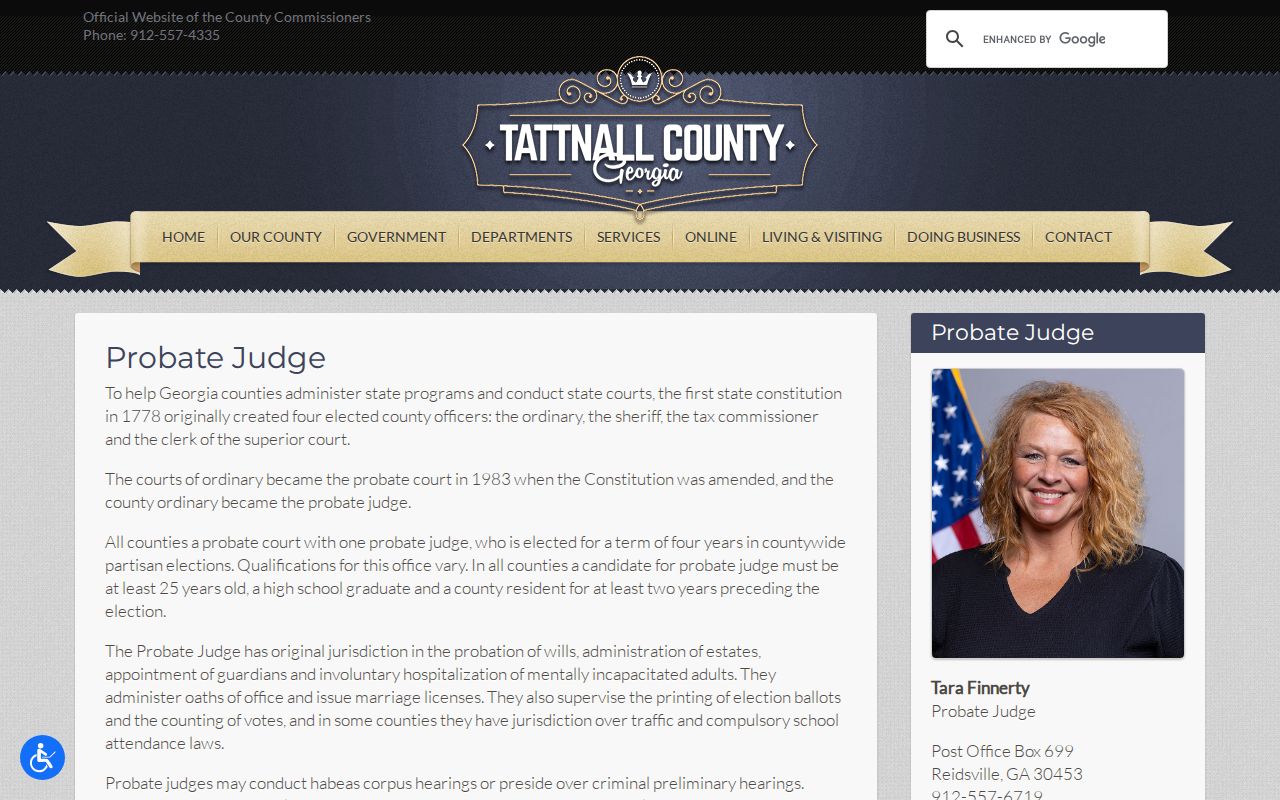
It identifies Probate Judge Tara Finnerty and phone 912-557-6719, but provides no online estate docket or fee table. Confirm the current walk-in location and copy process.
Tattnall Domestic Docket Privacy
The central clerk confirms domestic docket work, but that does not make every child-related, financial, or protected-address filing available without limits. Rule 21 and Georgia statutes shape redaction and access. A clerk may provide a redacted copy, withhold a protected part, or require authorization.
- Redaction
- Removal or obscuring of protected identifiers.
- Restricted
- Access limited by law, rule, or court order.
- Continuance
- A changed setting, not a final judgment.
- Disposition
- The recorded outcome or status, subject to later activity.
Discovery in pending litigation is a separate process and not an Open Records Act shortcut.
Tattnall Civil Record Requests
A focused request helps the custodian distinguish a docket from the full civil file. Name Tattnall County and the specific court. Provide the case style, approximate year, case number if known, and the exact item wanted. That item might be a complaint, petition, answer, motion, order, judgment, garnishment, dispossessory paper, estate document, transcript, or appeal notice. State whether inspection, an electronic copy, a paper copy, or a certified copy is needed.
- Address the request to the clerk or office that holds that court class.
- Use party names only to the extent needed to locate the case.
- Give a date range and document description, not a broad demand for all records.
- Include contact details so the custodian can give a fee notice or ask a locating question.
- Ask for the legal exemption if a portion is withheld.
The Tattnall open-records instructions say oral or written requests are allowed, though a written request is better. They also distinguish public-record access from discovery in a pending case. Discovery follows litigation rules and cannot be replaced with a general records request.
Older Tattnall civil research may lead to microfilm or archives. The county clerk identifies microfilm among the records it maintains, and the county archive describes historic court holdings reaching into the county's early history. Give the old court name, parties, approximate date, and record series when possible. PeachCourt's present account access should not be assumed to cover every historic file.
No Tattnall-specific court-copy rate, fixed delivery period, guaranteed electronic format, or same-day certification promise was located. Ask about likely cost and format before ordering. For certification, confirm whether the local clerk or GSCCCA eCertification is the proper route. The office holding the original record is the office that can explain its current copy and authentication process. Keep the response with the copy so its source, date, scope, and certification status remain clear.
Who Can See Civil Dockets
Georgia records are generally open unless law, rule, or an order limits access. A request should name Tattnall County, the court, record type, range, number, format, and certification need. The county warns that fees may apply but publishes no court-copy rate or guaranteed delivery time.
Domestic cases can contain protected child, financial, address, or family-violence material. Adoption and juvenile records have separate limits. A public docket does not make every attachment public.
Key Rules:
O.C.G.A. §§ 50-18-70 through 50-18-72 cover public-record policy, production, and exemptions.
Uniform Superior Court Rule 21 addresses restriction and redaction.
O.C.G.A. § 9-11-7.1 addresses protected identifiers.