
Tattnall County Court Record Requests
Most Tattnall County court case records sit with the Clerk of Superior Court. That office keeps the files for Superior, State, and Juvenile court. Those cover criminal, civil, domestic, and adoption matters. The county says most of this material can be viewed in the office. Probate Judge Tara Finnerty and Chief Magistrate John Mock each hold their own court records. Municipal cases stay with the city that issued them.
- Identify the court and record type before sending a request.
- Collect party names, case number, filing year, date range, and desired document.
- Check the authorized online provider if the case is in State or Superior Court.
- Call 912-557-6716 or visit the clerk at 111 North Main Street in Reidsville for inspection and copy procedures.
- For a mailed or written request, state the desired format and ask for fee notice before work begins.
The GSCCCA directory gives the clerk's mailing address as P.O. Box 39, Reidsville, GA 30453, with office hours of 8:00 a.m. to 5:00 p.m. Monday through Friday. Call ahead about identification, appointments, or prepayment. No public-terminal or self-service scanning policy is published.
Write a Narrow Tattnall Request
The Tattnall County Open Records Request page spells out the identifiers that help a search and notes that charges may apply.
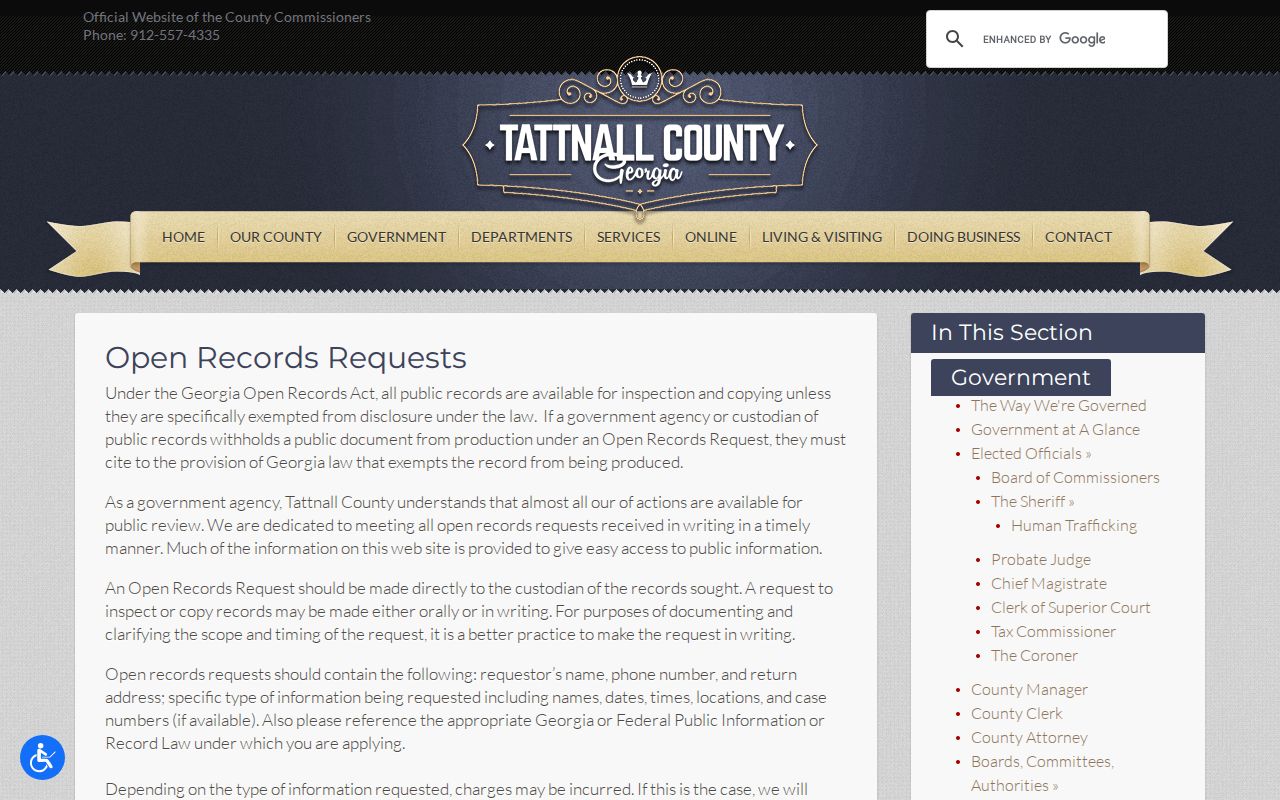
That official page rewards a tight request. It beats one asking for every file under a common surname. Give your contact details and the court. Add the record category, names, dates, and locations. Include a case number if you have one. State the format you want and ask for a cost notice first. Leave out Social Security numbers and other needless private identifiers.
Georgia allows oral open-records requests. Writing one down fixes the scope and the reply address. The county channel cannot bypass court discovery, sealing orders, or juvenile confidentiality. If the county sends a judicial record back to the clerk, follow that direction.
Kinds of Court Records
A case file can hold many pieces. It may contain an index, docket, pleadings, motions, and notices. Exhibits accepted for filing, orders, judgments, subpoenas, and appeal papers can appear too. What is actually there varies by court and case. The docket is the chronological record of activity. A document is a single filed or issued item behind an entry. Finding the docket does not guarantee online access to every document.
- Criminal files may include accusations, indictments, pleas, motions, orders, and dispositions.
- Civil and domestic files may include complaints, petitions, answers, hearings, judgments, and later enforcement papers.
- Probate files may concern estates, wills, guardianships, or other probate subjects.
- Magistrate files may include small civil claims, dispossessory actions, warrants, or preliminary hearings.
- Municipal files commonly concern city ordinances and citations.
Federal district and bankruptcy matters tied to Tattnall run through the Southern District of Georgia's Statesboro Division and PACER/CM-ECF. Those files never become county clerk records.
Tattnall Archives Extend the Search
Older Tattnall County material often leaves the live counter system for paper, microfilm, or archival storage. The official Tattnall archives page describes historic holdings along with digitized land and plat resources.
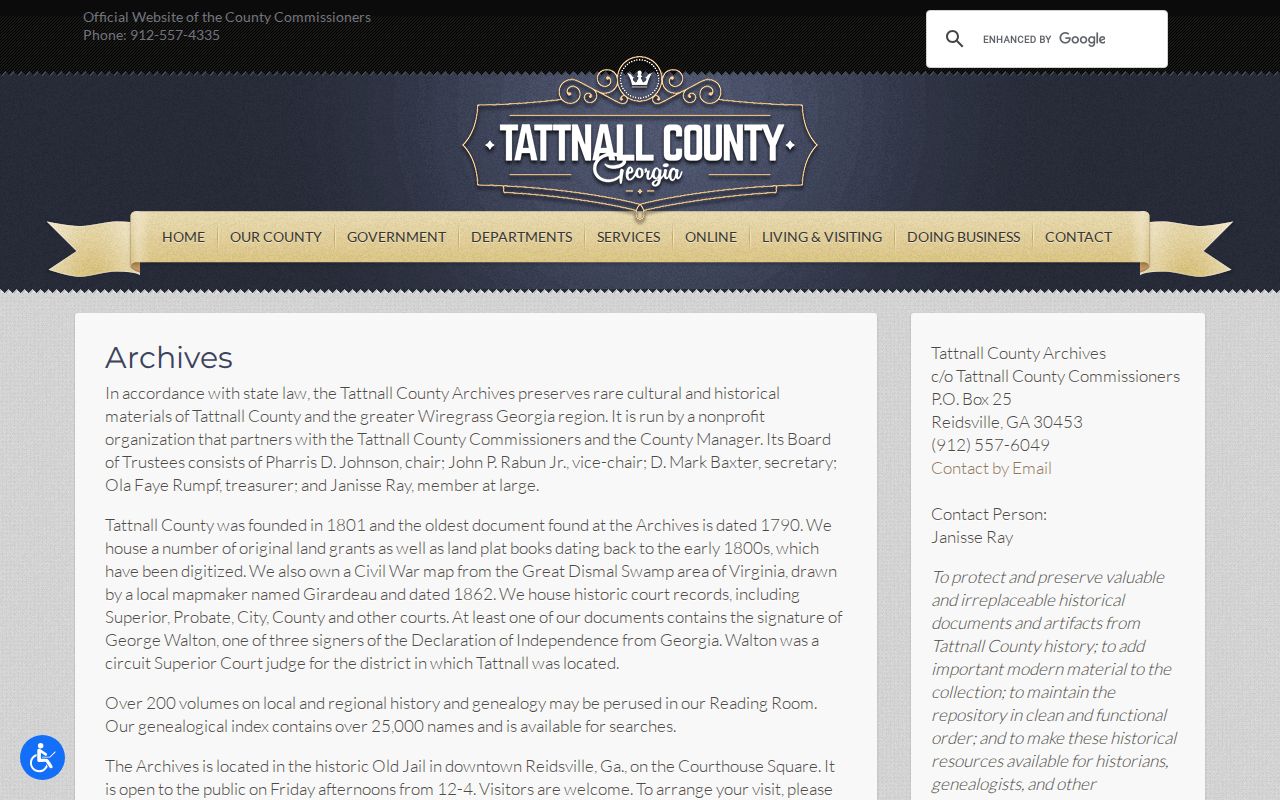
The county's oldest document dates to 1790, before Tattnall County even existed. That shows real preservation depth. Yet it does not put every historical court series online. When you contact the archive, name the court. Give an approximate year, the parties, and the record series. Staff may need to work through an index or microfilm to answer.
Historical searches take patience. Name spellings shift, and family notes often lack case numbers. Modern portals rarely index old material. A narrow year range plus a known document type makes the docket search practical.
Court Records: What They Contain
Read every record in context. A filed date is not always the incident or hearing date, and one docket label may summarize a much longer order.
| Case number | The court-assigned identifier; use its exact form. |
|---|---|
| Case style | The caption and party roles. |
| Filing date | The date a paper entered the court file. |
| Docket entry | A chronological note of a filing, setting, or action. |
| Order or judgment | The court's directive or decision, subject to later action. |
| Disposition | The recorded outcome or status of a claim or charge. |
| Access marker | A redaction, seal, or restriction affecting inspection. |
Check later entries, satisfaction papers, amended orders, and appeals before treating any single document as final. A certified copy only proves the clerk authenticated it. It adds nothing that the original record lacks.
Document Center Is Not a File Room
The Tattnall County Document Center is a public county repository for posted material.
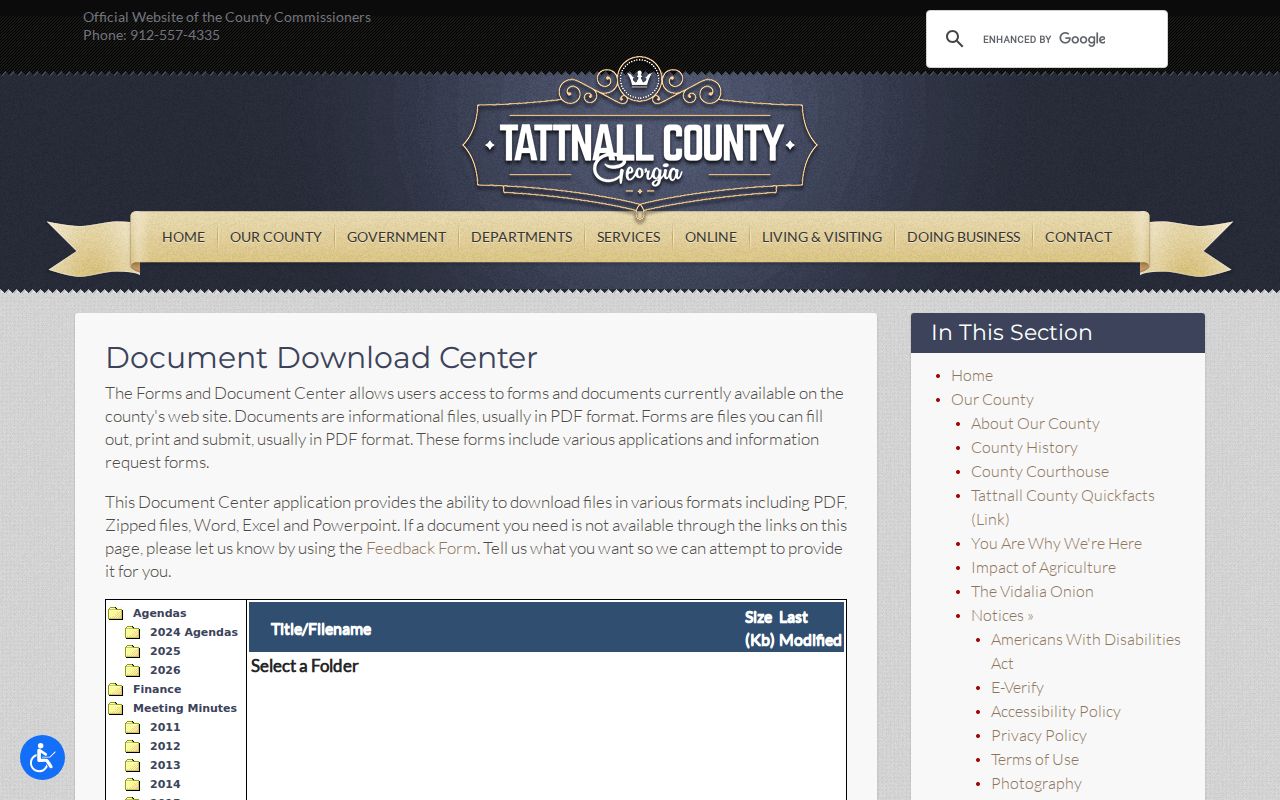
A document center holding some files is not a full archive of court pleadings. Use it only for what is actually listed. Send case-file requests to the court custodian. A missing PDF there does not mean the record is unavailable.
Repository check: identify whether a page is a county publication library, a docket index, or a court-document system before searching it.
Copy Fees and Certification
Tattnall has no published schedule of per-page court-copy charges, certification fees, search fees, exemplification fees, or mailing costs. Never assume an amount. The county warns that charges may apply and says requesters are contacted before processing when fees are involved. Ask for an estimate and the accepted payment method.
| Product | Verified amount | Next step |
|---|---|---|
| Inspection | Not stated in the reviewed sources | Ask whether the record is available at the counter |
| Plain copy | Not stated | Request page count and estimate |
| Certified copy | Not stated | Ask the clerk or check eCertification participation |
| Archive search | Not stated | Describe the series and year range |
| Postage or media | Not stated | Ask before processing |
The GSCCCA eCertification portal offers a digital certified-document request path for participating Georgia courts.
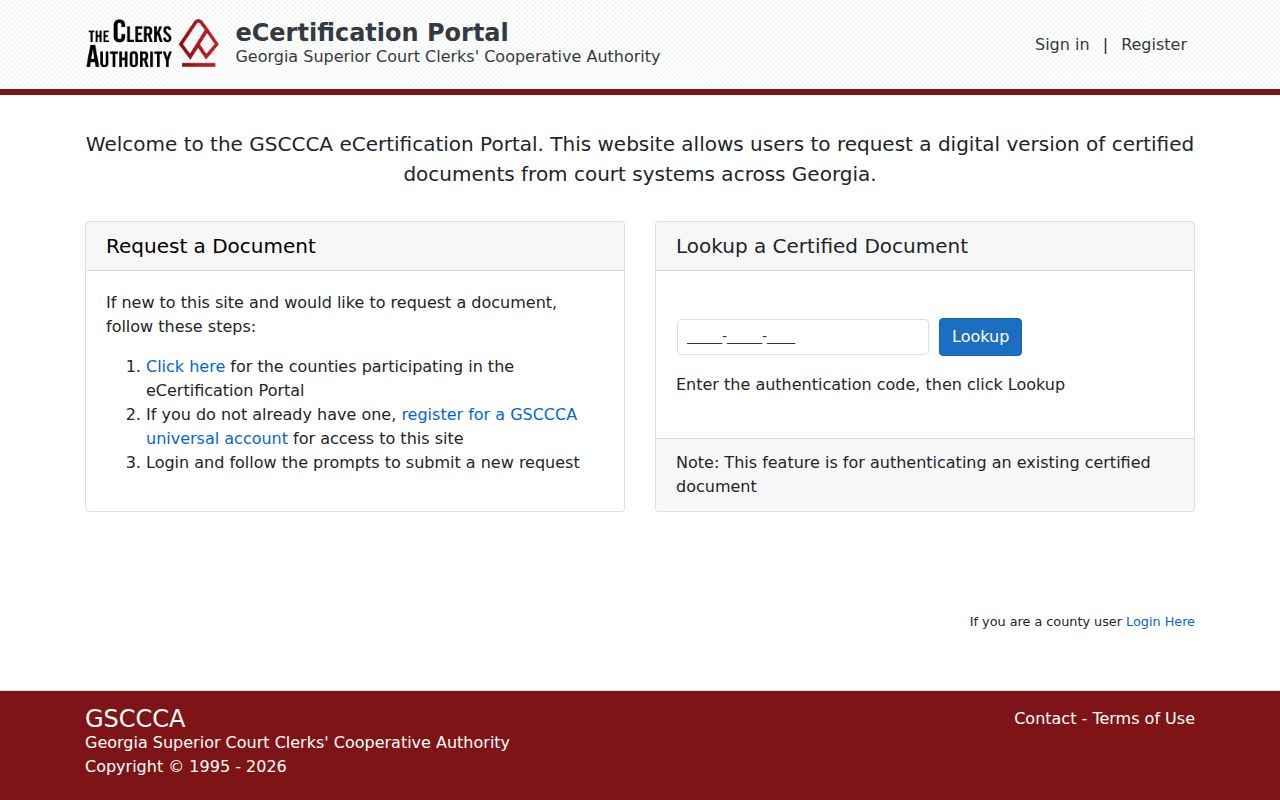
Confirm current Tattnall court participation and the exact document before you order anything. An uncertified image pulled from the docket is not a certified clerk copy.
E-Filing Does Not Replace Records
E-filing is how filers submit papers, not a public records room. The GSCCCA eFiling overview covers participation, registration, and filing support.
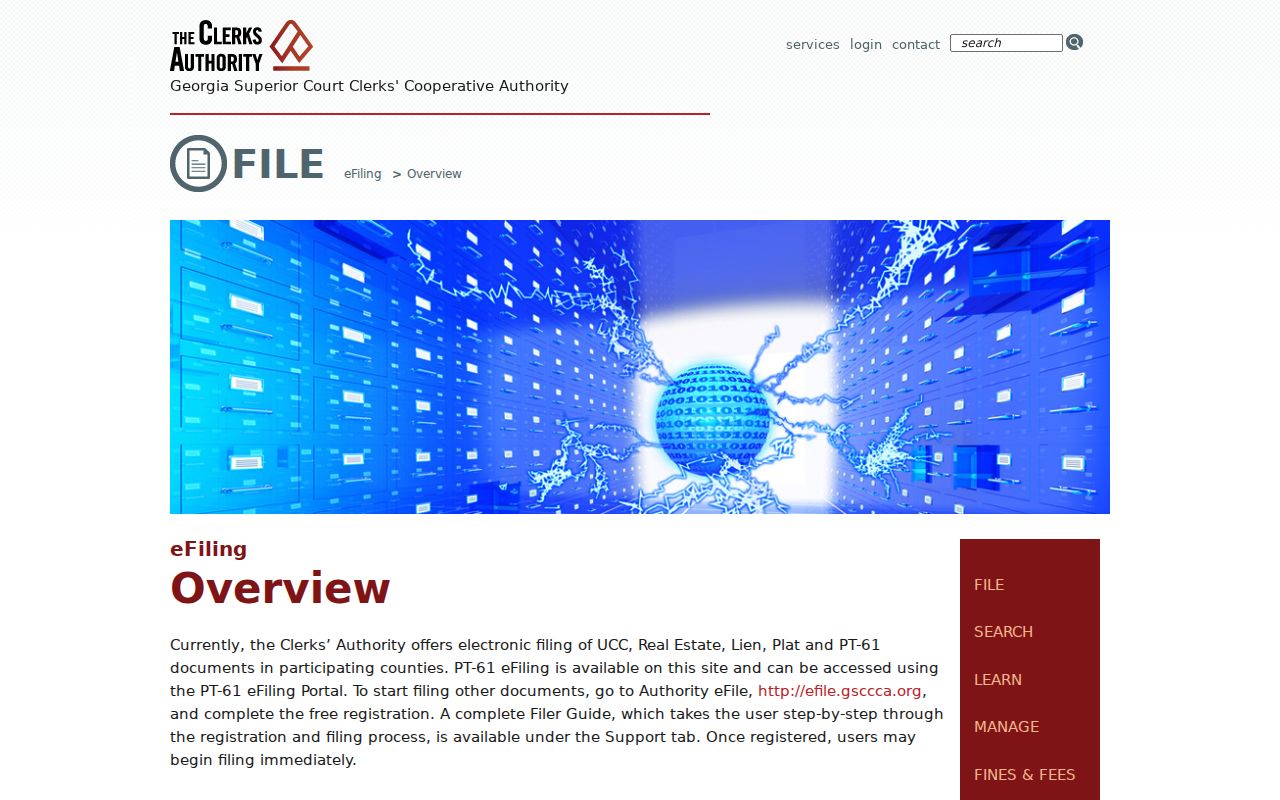
Georgia Courts separately lists PeachCourt as mandatory for Tattnall State and Superior e-filing. That provider detail promises neither anonymous access nor a complete historical index. Use the authorized route. Ask the clerk for any document it does not reach.
Keep the three actions straight. E-filing sends a paper into a court case. Case search locates an index or docket. A records request asks the custodian to inspect or copy held material.
Access Rules for Court Records
Want to see a Tattnall County court record? Go to the clerk's office. The county says most records can be viewed there, though the law draws some lines. Uniform Superior Court Rule 21 governs those limits. It covers restricted records, redaction, and the balance between access and privacy.
Some categories get special care. Juvenile material requires authorization. Sealed files stay closed, and protected identifiers may be redacted or left out. Family-violence and stalking-order records can also receive special handling under the rule.
One more process matters here. The 2025 judicial-security procedure under O.C.G.A. § 15-5-112 lets qualifying judges, justices, and their spouses ask that protected-person information be restricted. It is a narrow safety tool. It is not a way for an ordinary party to pull a public case from view. Questions about access go to the clerk, and any request for restricted material must follow the governing rule or a court order.
Public does not mean unrestricted. Do not attempt to defeat a seal, redaction, juvenile rule, or access order.
Ask for the public portion and the proper procedure if access is limited.
CourtTRAX Has a Different Purpose
The official CourtTRAX forms page posts consolidated monthly remittance forms for several Georgia court types.
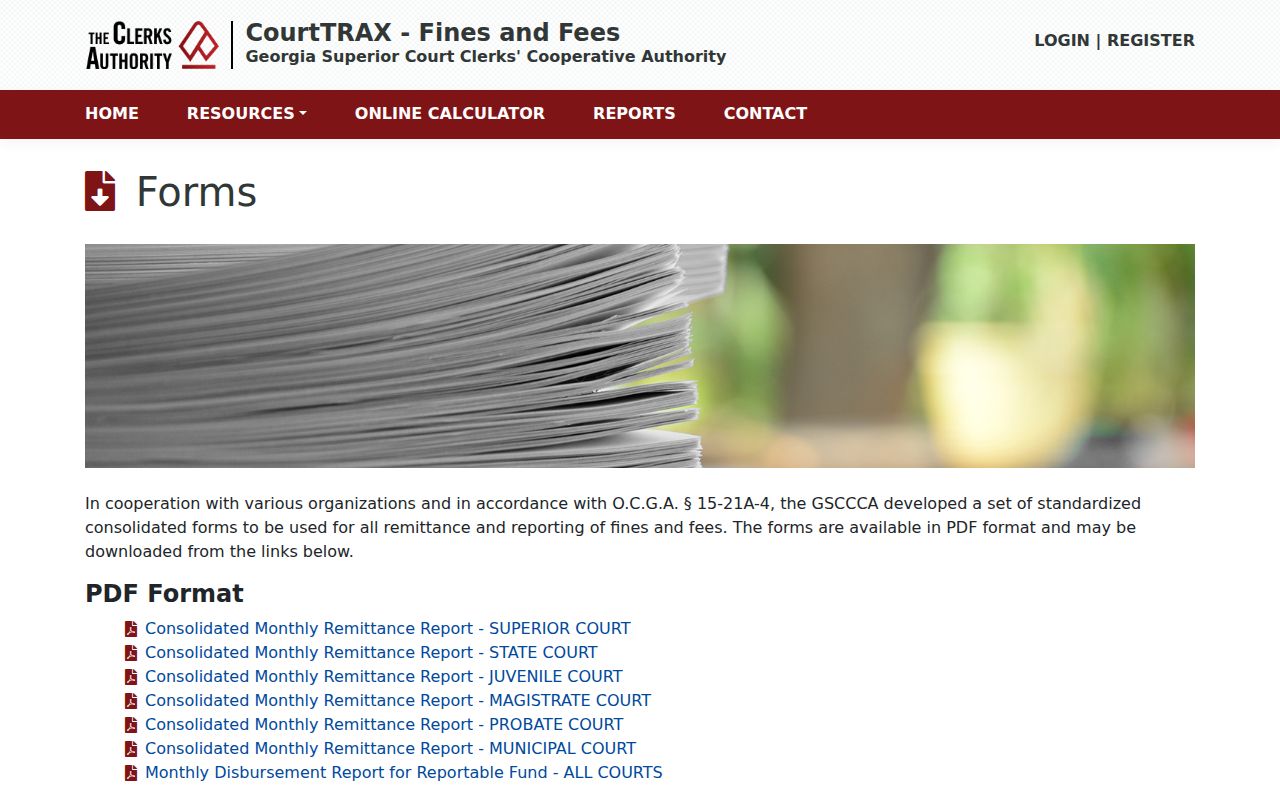
These are administrative forms. They deal with court fines, fees, and reporting across the state, not with individual cases. Nothing on that page is a Tattnall County court docket or a person's court record.
The same boundary applies to aggregate reports and calculators. A statewide form or a monthly total cannot tell you what happened in one case. Want the truth of a docket, order, or judgment? Get a certified copy from the clerk who keeps the original file.